Reviews are not a vanity metric. They are one of the top three factors that determine where you rank in the local map pack. And among reviews, recent ones count more than old ones. A pool builder with 200 stale reviews ranks below a builder with 80 fresh reviews from the last 6 months.
A review workflow should make honest feedback convenient and keep requests consistent. There is no promised review count, rating or ranking result. Automation still requires monitoring, customer support and current contact permissions.
A consistent review-request workflow helps the team ask genuine customers for honest feedback. The process below is a practical model, not a verified claim of 60 new five-star reviews for a named client.
Step 1: A direct Google review link, not a 'leave us a review' page
Use the direct review link available from the Business Profile and test it on common devices. It can reduce unnecessary navigation, but does not guarantee a response or eliminate sign-in requirements.
Give the customer a clear link to the correct business and a neutral request. Avoid routing them through a satisfaction filter before offering the public review option.
Track eligible requests and actual responses without assigning invented open, click or five-star conversion percentages to a diagram.
Step 2: SMS within 24 hours of project completion
Choose text or email according to customer permission and preference. Send a reasonable request after actual work and measure your own response rate. No universal SMS or email conversion multiplier applies.
Use a short request, a convenient link and a reasonable reminder if appropriate. Customers remain free not to respond or to leave any honest rating.
Step 3: Three-day follow-up, exactly once
If no review is left in 3 days, send one (and only one) follow-up SMS. Anything more starts feeling like nagging. The follow-up should reference the project specifically: 'Hi Mark, just following up. Would love to hear how the pool's holding up.' Keep it human.
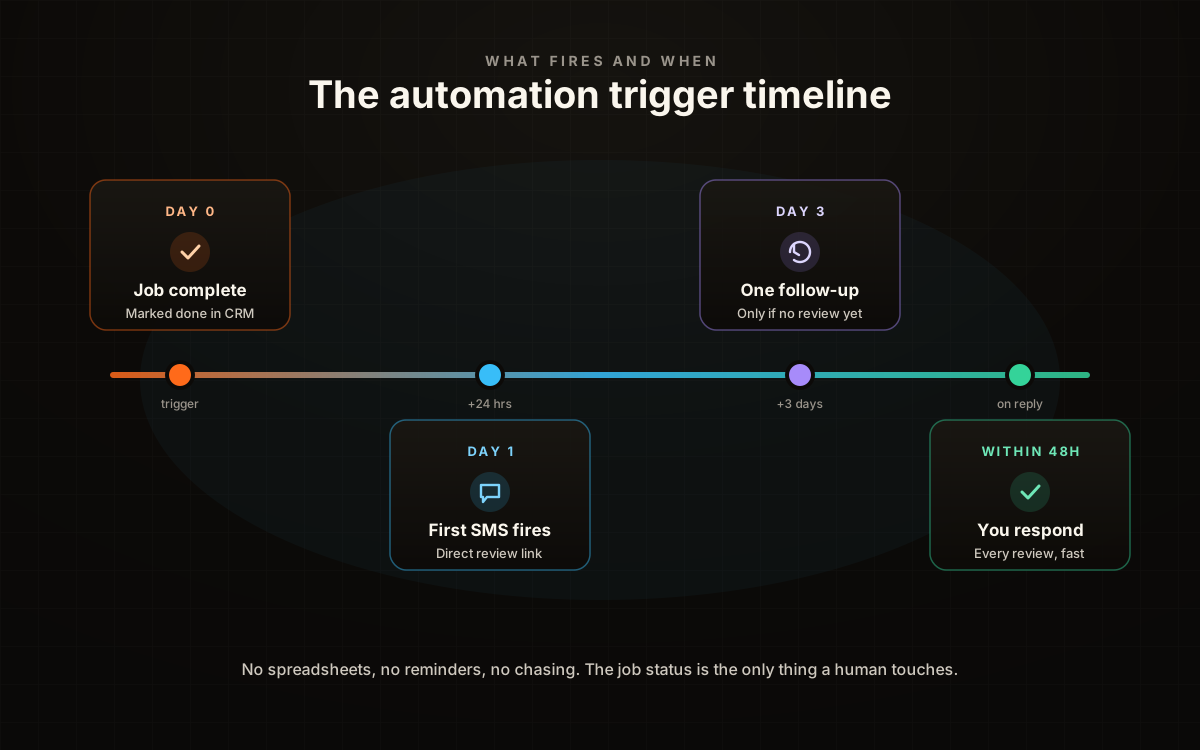
Step 4: Respond to every single review within 48 hours
Respond professionally to feedback as customer communication. Google does not confirm a direct local-ranking benefit from a particular response rate. Keep private project details out of public replies.
Acknowledge positive and negative feedback without keyword stuffing or defensive claims. Give the team a realistic response process and an escalation route for issues that need private follow-up.
Step 5: Track velocity, not just count
Aim for 4-6 new 5-star reviews per month, sustained, instead of going for 'we need 100 reviews this quarter.' Steady velocity beats spikes. Spikes look fake to Google's spam detection.
Choose a consistent request process based on completed eligible work, not a monthly quota of positive ratings. Participation varies, and a sudden change in review count is not by itself proof of spam or a guaranteed ranking change.
Reviews only count if your profile itself is ranking-ready. Here is the full GBP checklist.
Optimize your Google Business ProfileWant the deeper dive on how reviews compound with the rest of your local SEO? We wrote standalone playbooks for that, trade by trade.
The complete guide to earning and answering Google reviews, trade by trade.
Get the full reviews playbookReview management is included in Lead & Local Growth ($2,000/month) and Local Authority ($3,500/month). Start with a free strategy call and initial audit.
Want this engine built for you?Sources and further reading
- Google Search: SEO Starter Guide
Crawlable links, descriptive page information and content organization. Practical trade examples are SF Web Tech recommendations.
Source checked .
- Google Business Profile: local ranking guidance
Google’s broad relevance, distance and prominence guidance. No exact ranking weights or guaranteed service-area coverage are stated.
Source checked .
- Google Maps: prohibited and restricted content
Rules against fake engagement, incentives and selectively soliciting positive reviews.
Source checked .