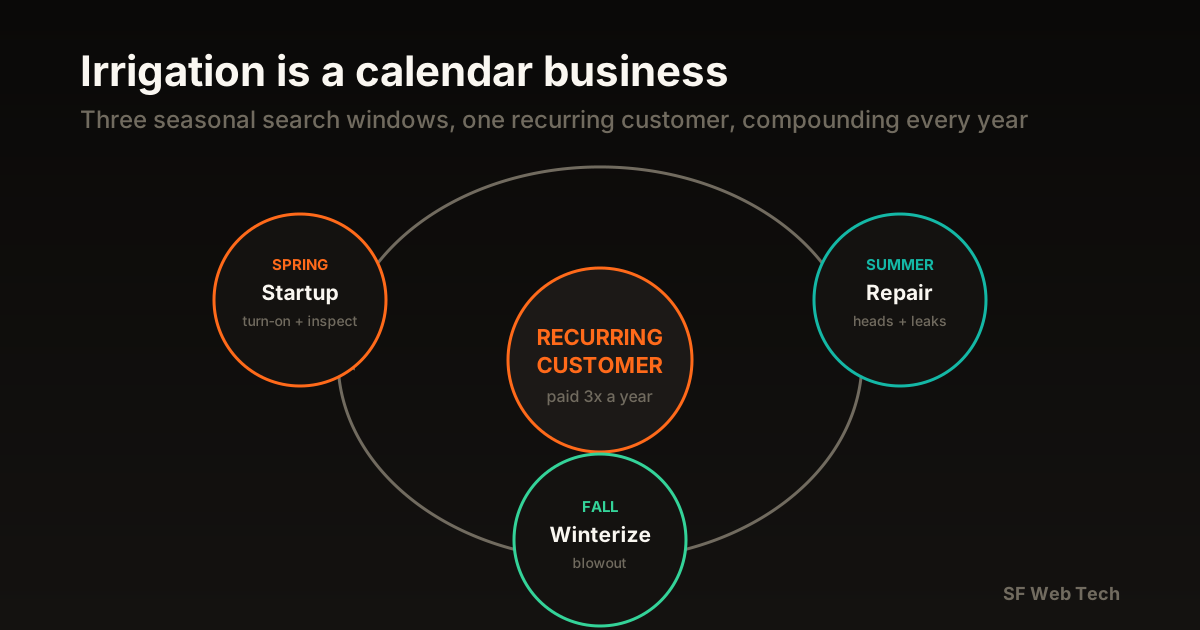
A homeowner calls you in April to turn their sprinkler system back on. You send a tech, run the zones, charge for the startup, and move on to the next call. Six months later that same yard needs a winterization blowout, the homeowner types "sprinkler blowout near me" into Google, and hires whoever shows up first. If that is not you, you just handed a recurring customer to a competitor over a search result you could have owned.
Irrigation services can involve recurring seasonal visits, depending on climate and the system. Explain which services are offered locally and when the contractor accepts bookings. Repeat work and future search visibility should not be promised as automatic revenue.
Why Irrigation Is a Calendar Business
The trades that dominate generic contractor SEO guides sell big, infrequent jobs. Your economics are the opposite. You sell smaller tickets, but the same house needs you again in a few months, then again next spring. The winner is not whoever closes the biggest single job. It is whoever owns the search result every time that homeowner comes back.
Use the operator’s own calendar and customer records to plan startup, repair or winterization content where those services apply. The timing and number of seasonal demand periods vary by market.
That compounding is the whole game. Land a spring startup, do it well, and you are the obvious call for the fall blowout. Handle the blowout, and you are the first name they think of when a head cracks next July. But thinking of you and finding you are two different things. If your competitor ranks for "sprinkler winterization near me" and you do not, the customer you serviced in April can still slip away in October.
The Three Seasonal Search Windows
Each window is a separate search surge with its own buyer urgency, its own keywords, and its own money. Treat them as three distinct campaigns, not one blurry "irrigation services" push.
Buyer urgency changes the copy each page needs. A startup page can afford to educate and upsell smart controllers. A repair page has to load fast, put your phone number above the fold, and promise same-week service. A winterization page has to sell the deadline and the cost of getting it wrong. One page cannot do all three jobs well.
Build One Page Per Season, Not One Generic Page
Startup, repair and winterization can answer different customer questions. Give them separate pages when there is enough distinct scope and useful information, while retaining a clear irrigation hub. A single broader page does not automatically fail to rank.
Give each seasonal service its own page, its own title tag, its own headline, and its own set of matching keywords. Then support them with service-area pages for the cities and neighborhoods you actually cover.
- Spring startup page: system turn-on, zone testing, spring inspection, and controller programming.
- Repair page: broken heads, leaks, valve and wiring faults, dead zones, and same-week emergency service.
- Winterization page: blowout service, the freeze deadline, and what a cracked line costs to fix.
- Installation page: new system design and smart controller upgrades for higher-ticket buyers.
- Service-area pages: one per core city or neighborhood, linked from every service page.
Organize pages around the real services offered and explain appropriate scheduling. Link related seasonal guidance without duplicating it. The structure should help customers find the correct service, not promise a new ranking asset for every season.
Seasonal service information and local SEO within the agreed package scope.
See our Local SEO serviceGoogle Business Profile: Seasonal Categories and Photos
Your Google Business Profile is what wins the map pack, and it is where local buyers decide whether to call you. Set it up to reflect a business that runs year-round, not one that only shows up in spring.
- Set a primary category that matches your core work, then add relevant secondary categories like sprinkler system contractor and irrigation equipment supplier.
- Rotate your profile posts with the calendar: startup tips in spring, repair and leak content in summer, winterization reminders in fall.
- Upload real job photos by season and name the service and city in each caption so the profile stays fresh across the year, not just at turn-on time.
- Fill out your service list with each seasonal service by name so buyers and Google both see the full range.
- Keep your service area accurate to the cities you cover, and match it to your service-area pages.
Update hours, availability and service information when they change, and show genuine work. Posts and photographs are useful customer communication; Google does not promise higher rankings for a fixed posting cadence.
The full checklist for turning your Google Business Profile into a lead machine.
Read: GBP optimization for contractorsThe Recurring-Customer Funnel
Once the pages and the profile are ranking, the seasons feed each other. A spring startup customer is a fall winterization prospect. That winterization customer is next spring's startup and next summer's repair. The SEO asset does not just find new customers, it re-finds the ones you already served, at the exact moment they need you again.
“The one-shot trades spend every season buying brand-new customers. Irrigation contractors who nail seasonal SEO spend it harvesting the same customers three times over.”
Time Your Reviews to the Season That Just Ended
Reviews win the map pack, and their timing is a hidden advantage in a seasonal business. Ask for a review right after each seasonal job, while the work is fresh. A steady drip of reviews landing in April, in July, and in October keeps your profile active exactly when the next season's buyers are comparing options.
A simple system for collecting reviews after every job without being pushy.
Read: how to get more Google reviewsThe Payoff: An Asset That Compounds
Evaluate the website by the qualified opportunities and customer service it supports. Owned content can remain useful over time, but needs maintenance and does not guarantee recurring income. Scope and prices for SF Web Tech are set out on the pricing page.
Track new acquisition separately from returning-customer bookings. That distinction helps assess both marketing performance and the value of the service relationship.
Build the pages once, keep the profile and reviews fresh, and the same search results keep working for you in April, July, and October, year after year. That is the difference between chasing leads and owning a season.
We will map your three seasonal windows and build the pages that rank for each. Email sohail@sfwebtech.com.
Book a free strategy callSources and further reading
- Google Search: SEO Starter Guide
Crawlable links, descriptive page information and content organization. Practical trade examples are SF Web Tech recommendations.
Source checked .
- Google Business Profile: local ranking guidance
Google’s broad relevance, distance and prominence guidance. No exact ranking weights or guaranteed service-area coverage are stated.
Source checked .
- Google Maps: prohibited and restricted content
Rules against fake engagement, incentives and selectively soliciting positive reviews.
Source checked .