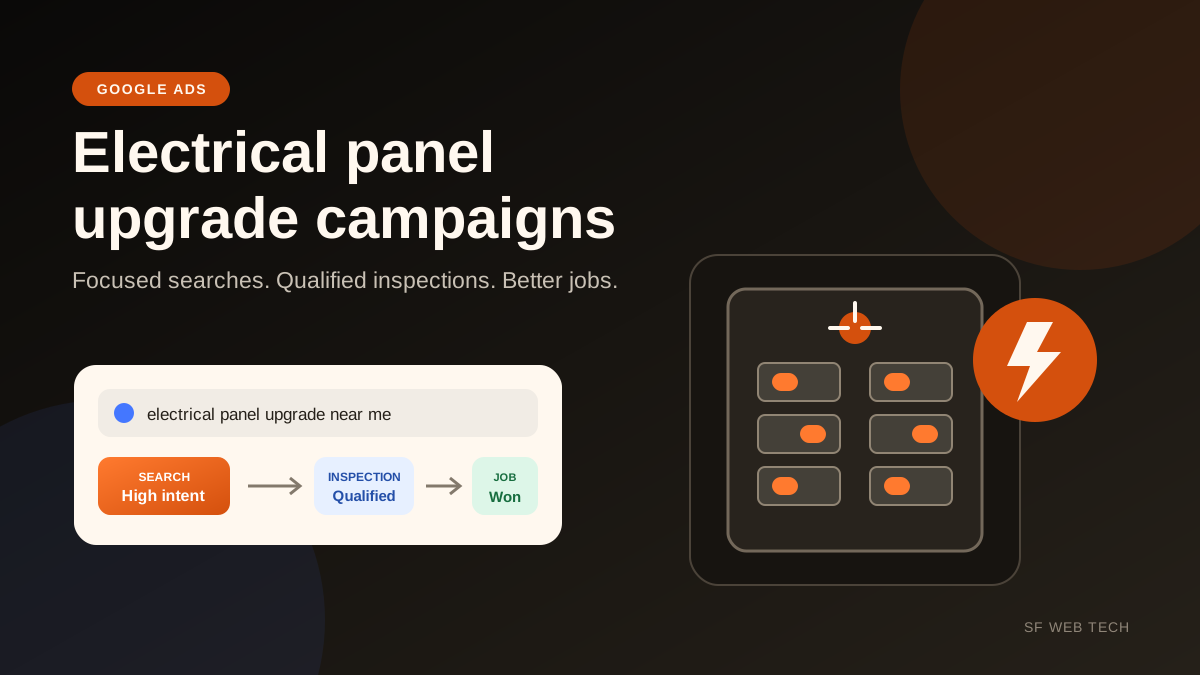
If your home-service Google Ads account is bleeding cash, the problem is almost never the budget. It's the foundation. Bad conversion tracking, generic ad groups, ads pointing to your homepage instead of intent-matched landing pages. We see the same five mistakes on every account we audit.
This guide describes a practical account-review process: establish reliable measurement, align campaigns with the services sold and evaluate qualified outcomes. It is not a claim that every account can reproduce a particular client’s revenue, return or turnaround time.
Here's the playbook.
The five mistakes we see on every audit
Week 1: Stop spending blind, start measuring
Before optimization there's measurement. The first job is rebuilding conversion tracking from the ground up. Most accounts we audit have one or more of these broken: form events not firing, call tracking missing, GA4-Ads import not connected, revenue values not assigned to conversions.
Test supported call and form tracking, distinguish qualified outcomes from raw interactions, and avoid duplicate imports. Use actual revenue or a clearly documented proxy where appropriate; do not invent values simply to give bidding a number. Review non-converting spend in context before pausing it.
Weeks 2-4: Restructure into tight ad groups
The biggest single waste in most home-service accounts is one giant 'main campaign' with 200 keywords and 3 generic ads pointing at the homepage. The fix: tight ad groups, one per intent cluster, with ad copy that matches the keyword and a landing page that matches the ad.
For a product-led account, separate meaningful product categories and their landing pages. For a service business, organize around the actual services and intent instead. Test ad variations within the platform’s current format, and consider broader campaign types only when tracking and business outcomes are understood.
Build dedicated landing pages, not 'send them to the homepage'
Sending Google Ads traffic to your homepage is the most expensive shortcut in marketing. Your homepage tries to be everything to everyone. A landing page should be one thing to one person who clicked one ad.
- One offer per landing page (no 6 service options, no nav)
- Headline matches the ad headline word-for-word
- Trust elements above the fold: license, certifications, review count
- Form (or click-to-call on mobile) inside the first viewport
- Page speed under 2 seconds, every single time
Add negative keywords every week for the first 8 weeks
Review actual search terms and qualification reasons. Add negatives for clear mismatches, but do not automatically block cost questions or research-stage prospects who may be suitable. This work does not guarantee a 30-40% saving or preserve every qualified click.
When (and only when) you have 90 days of clean data, layer in Performance Max
Performance Max is incredibly powerful and incredibly bad at optimizing without good signal. We never run PMax until: (1) conversion tracking is clean, (2) revenue values are assigned, and (3) we have at least 30+ tracked conversions for the algorithm to learn from. Skip those prerequisites and PMax will burn your budget on irrelevant audiences.
What's changed in 2026 (and what hasn't)
The playbook above is durable, but Google keeps moving the platform underneath it. Three shifts are worth adjusting for this year. Every one of them rewards the accounts with clean tracking and punishes the ones without it, which is exactly why the foundation work comes first.
The same rebuild applied to a high-velocity, low-ticket trade.
Read: Google Ads for Junk RemovalThree numbers that matter, three that don't
What we report monthly: cost per qualified lead, ROAS, share of voice on top commercial-intent keywords. What we don't report: impressions, click-through rate, average position. Those move when the wind blows. The first three are the only numbers that determine whether the account is profitable.
Industry-specific playbook for the highest-volume home-service trade.
Read: Google Ads for PlumbersFull-service Google Ads management for home-service contractors.
See our Google Ads serviceWhat this looks like in dollars
Evaluate media cost, management expense, qualified inquiries and contribution from completed work. Keep attribution limitations and the reporting period visible rather than presenting an undated lifetime return.
The review sequence is measurement, service and location alignment, landing-page checks, then evidence-led optimization. Timing depends on account eligibility, data volume and the sales process. A portfolio example is not a universal 60-day profitability promise.
The same rebuild applied to high-ticket storm-driven roofing leads.
Read: Google Ads for Roofing CompaniesHow the structure wins seasonal, emergency-driven HVAC service calls.
Read: Google Ads for HVAC CompaniesHonest breakdown of which channel gets home-service contractors more jobs.
Read: Contractor SEO vs Google AdsHow the same structure wins emergency-intent, high-ticket restoration leads.
Read: Restoration Company Google Ads30-minute call. We'll screen-share your account and tell you exactly what's broken, even if you don't hire us.
Get a free Google Ads auditSources and further reading
- Google Search: SEO Starter Guide
Crawlable links, descriptive page information and content organization. Practical trade examples are SF Web Tech recommendations.
Source checked .
- Google Ads: keyword matching options
How keyword match types relate to search intent; account strategy and examples are editorial recommendations.
Source checked .
- Google Ads: negative keywords
Negative keyword behavior and exclusions. The suggested service exclusions require account-specific review.
Source checked .
- Google Ads: advanced location options
Presence and interest settings and the limits of geographic targeting accuracy.
Source checked .
- Google Ads: average daily budgets
Platform budget and spending mechanics, not a trade-specific CPC or lead-cost forecast.
Source checked .