A search for epoxy garage flooring can refer to a DIY product or professional installation. Make the offered service clear in the ad and landing page, then inspect actual search terms and qualified inquiries. Do not assume every broad search is unsuitable.
DIY and installation searches can overlap in flooring and other trades. Use negative keywords carefully and test the wording against real inquiries. The objective is a service match, not excluding every visitor who has researched a product.
Why epoxy has the worst DIY overlap in paid search
Search intent overlap is the real enemy here. Most trades have a clean split between researchers and buyers. Epoxy does not. The same keyword serves a curious weekend warrior and a high-ticket buyer, because the product exists at both ends of the price spectrum under nearly identical names.
Review kit, tutorial and supply-only searches if the company sells installation alone. Decide exclusions from context so useful research-stage prospects are not removed automatically. This is an account test, not a claim that every generic flooring keyword wastes spend.
Think about what a broad-match campaign actually buys you. You bid on "epoxy floor." Google serves your ad to someone searching "epoxy floor kit how to," "epoxy resin gallon," "Home Depot garage floor paint," and "DIY epoxy roller." Each of those clicks costs you real money and none of them will ever sign a contract. Concrete coating clicks are not cheap, so a wasted click stings.
Use the contractor’s current scope and estimate records for any advertised price. Surface preparation, area, condition and the actual coating system affect the quote. Retail kit prices and unattributed national installation ranges are not a reliable basis for an ad promise.
Look at that spread. Your job costs 25 to 40 times what the kit costs. The person who buys the kit and the person who hires you are not the same human being, but they type the same words. Your entire Google Ads strategy has to be built around separating them, and you have exactly two tools to do it: negative keywords and ad copy.
Negative-keyword architecture: the filter that pays for itself
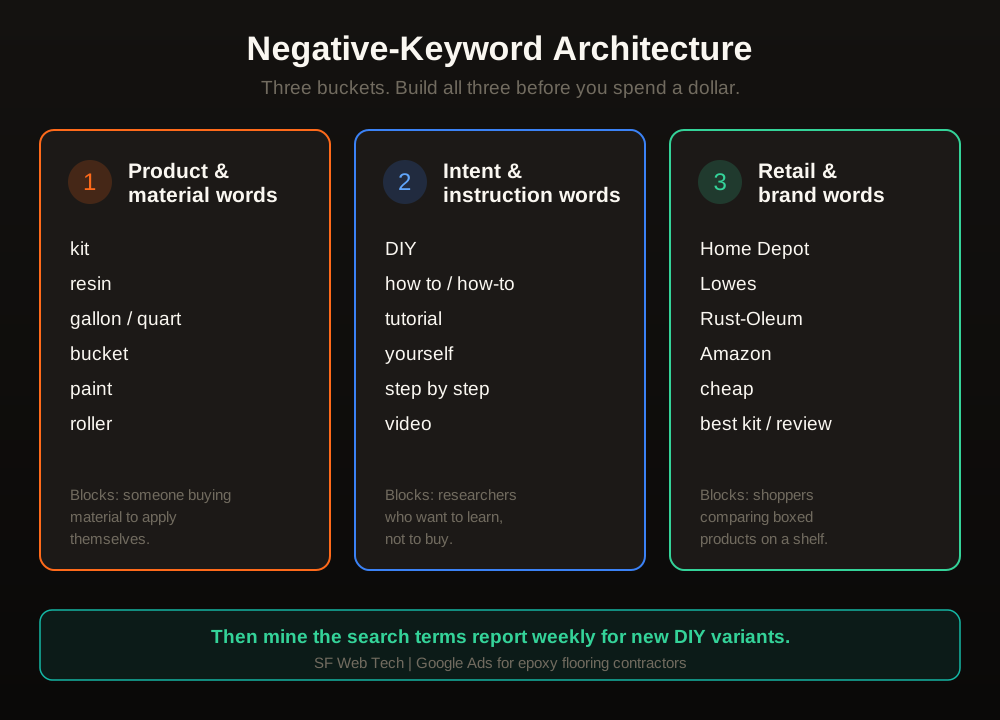
A negative keyword tells Google never to show your ad when that word appears in the search. It is the cheapest lever in the entire platform because it costs nothing and it stops you from paying for clicks that cannot convert. For epoxy, negatives are not a cleanup task you do once. They are the architecture the whole account sits on.
Group your negatives by the type of wrong shopper each one blocks. There are three buckets, and every epoxy account needs all three from day one.
- epoxy garage floor installer near me
- polyaspartic garage floor company
- professional concrete coating contractor
- garage floor coating quote
- commercial epoxy flooring installation
- epoxy kit for garage floor
- how to epoxy a garage floor yourself
- Rust-Oleum garage floor reviews
- cheap epoxy resin gallon
- DIY metallic epoxy tutorial
The pattern is obvious once you see it side by side. The left column is written by someone who has already decided to hire out the work. The right column is written by someone who has decided to do it himself. Your negative keywords are the wall between them, and building that wall well is the difference between a campaign that prints leads and one that quietly drains your card every month.
We build the negative-keyword architecture so you stop paying for DIY clicks.
See our Google Ads management for contractorsThe contrarian move: put your price in the ad
Standard PPC advice says never mention price in your ad copy. Keep them curious, get the click, sell on the landing page. For most businesses that is fine. For epoxy, it is exactly backwards, and following it is why so many contractors burn budget.
A genuine starting price or range can help set expectations when its scope and exclusions are clear. Test whether it improves qualified inquiries. Do not publish a generic per-square-foot figure as the business’s price or assume it prevents every unsuitable click.
The ad should say professional installation when that is the offer. Compare inquiry quality and contribution before deciding whether a price disclosure is useful. A visitor researching DIY options is not automatically unqualified.
“In epoxy, the price you are afraid to show in the ad is the exact thing that stops you from paying for clicks that will never convert. Hiding it does not help you. It just makes the DIY crowd click first.”
Pair the price line with words that reinforce professional install: "licensed installer," "one-day polyaspartic," "lifetime warranty," "free on-site quote." Every one of those phrases is invisible to a kit shopper and magnetic to a real buyer. The ad itself becomes a second filter sitting behind your negative keywords.
Local Services Ads: the other lever most contractors ignore
Google Local Services Ads sit above the regular search ads and charge you per lead instead of per click. For epoxy, that pricing model quietly solves part of the DIY problem, because a kit researcher is far less likely to fill out a lead form asking for a professional quote than to idly click a text ad. The friction of the form does some filtering for you.
Check current LSA eligibility for the actual service and market before including it. Verification, badges, billing and credit rules are platform-specific and can change. Compare qualified inquiries under the business’s criteria rather than assuming every platform lead is suitable.
Run Local Services Ads and search ads together, not as a choice. The Local Services listing catches the high-trust, ready-to-hire buyer at the top of the page. Your search campaign, wrapped in its negative-keyword armor and price-in-ad copy, catches the buyer comparing installers a little further down. Both are pre-qualified against the DIY crowd, just by different mechanisms.
Bring your current epoxy campaign. We will show you exactly where budget is leaking.
Book a strategy callThe landing page has to finish the qualification
Filtering out DIY clicks gets the right person to your site. The landing page has to close the intent gap the rest of the way. A qualified epoxy click that lands on a generic "flooring services" page is a click you filtered for and then wasted.
- Lead with the professional-install price range and one-day timeline so the visitor confirms they are in the right place.
- Show real before-and-after photos of garage floors, not stock resin swirls, since your buyer is judging craftsmanship.
- Name the coating systems by type: polyaspartic, polyurea, high-build epoxy. A serious buyer has been researching these words.
- Put a short quote form and a phone number above the fold. High-intent buyers want to talk now, not read.
- State your warranty and licensing plainly. It separates you from the fly-by-night installers and the DIY option in one line.
That is five moves, and every one of them reinforces the same message the ad started: this is a professional service for a buyer who has decided not to do it himself. Consistency from search term to negative keyword to ad copy to landing page is what turns a filtered click into a booked estimate.
Put it together
Epoxy paid search is not won by bidding more. It is won by refusing to pay for the wrong person. Build the three negative-keyword lists before you launch. Put your price in the ad to filter kit shoppers for free. Run Local Services Ads alongside search to catch the high-trust buyer. Then make the landing page confirm, again, that this is professional work for a serious buyer. Do that, and the budget that used to leak on DIY clicks turns into booked jobs.
Keep approved prices and their qualifications consistent across ads and pages. Update repeated claims when scope or pricing changes, and make clear when an assessment is needed for a final quote.
We will find the DIY clicks draining your account and show you the fix.
Get a free epoxy campaign auditThe broader playbook your epoxy campaign sits inside.
Read: Google Ads for home services in 2026Rank the organic way while your ads pre-qualify the buyers.
Read: flooring contractor website SEOSources and further reading
- Google Search: SEO Starter Guide
Crawlable links, descriptive page information and content organization. Practical trade examples are SF Web Tech recommendations.
Source checked .
- Google Ads: keyword matching options
How keyword match types relate to search intent; account strategy and examples are editorial recommendations.
Source checked .
- Google Ads: negative keywords
Negative keyword behavior and exclusions. The suggested service exclusions require account-specific review.
Source checked .
- Google Ads: advanced location options
Presence and interest settings and the limits of geographic targeting accuracy.
Source checked .
- Google Ads: average daily budgets
Platform budget and spending mechanics, not a trade-specific CPC or lead-cost forecast.
Source checked .
- Google Maps: prohibited and restricted content
Rules against fake engagement, incentives and selectively soliciting positive reviews.
Source checked .
- Google Local Services Ads: getting started
Eligibility, lead handling and verification. Platform lead-billing criteria differ from a contractor’s sales qualification.
Source checked .
- Google Local Services Ads: Google Verified badge
Current badging and discontinuation of the former Google Money Back Guarantee.
Source checked .