A homeowner's roof is leaking into her kitchen. She grabs her phone, searches for roofers in her area, and taps the first three sites she sees. On yours, the phone number is a tiny gray link buried in the footer, the page takes six seconds to load, and the only next step is a contact form asking for her address, her email, and a paragraph describing her project. She is gone in eight seconds and dialing your competitor before your hero image finishes loading.
Before changing the site, check both traffic quality and the inquiry path. A weak result can come from irrelevant visits, unclear scope, a broken form or poor follow-up. Use actual evidence rather than assuming the website is responsible for every missing lead.
Measure relevant visits, qualified inquiries, inspections and completed jobs separately. Neither an industry conversion average nor a generic roof price establishes the opportunity for this contractor.
Calculate the opportunity using your own numbers
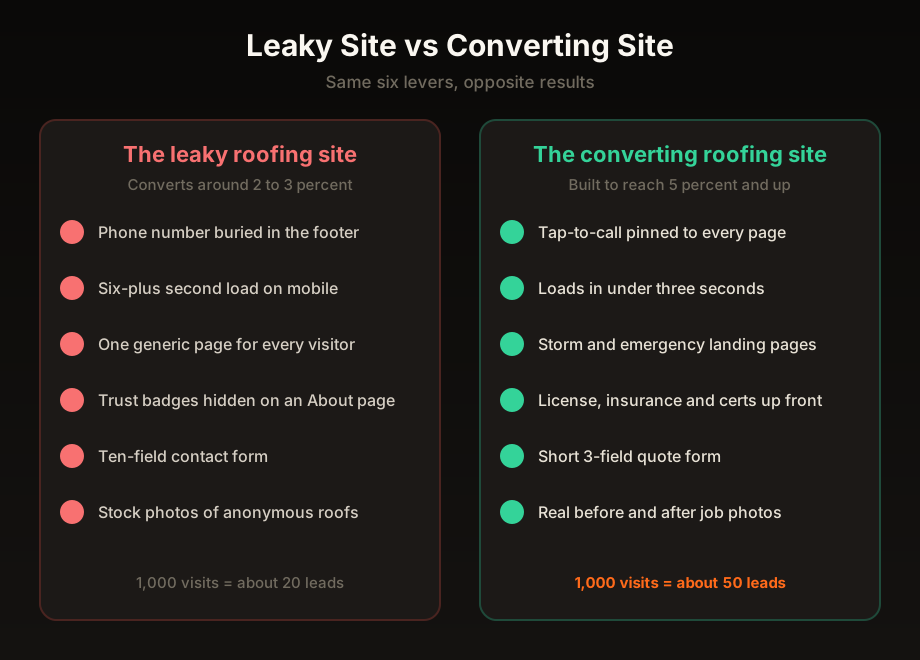
Illustrative arithmetic: 1,000 visits at 2% produce 20 conversions; at 5% they produce 50. That is a scenario, not an expected lift. Lead quality, visitor mix and close rate must remain in view when evaluating a design change.
Use the actual contribution from completed roofing work when assessing acquisition expense. Revenue, gross profit and net profit are different. A website improvement must be measured against its cost and the outcomes it supports, not a presumed average roof value.
Why your roofing site leaks leads
Roofing visitors may be handling an urgent problem or planning a replacement. Explain real availability, inspection steps, scope and evidence. Do not assume every prospect has the same concern, budget or decision timeline.
- Phone number pinned to the top of every page, tap to call
- Loads in under 3 seconds on a phone
- Dedicated storm and emergency pages that match urgent searches
- License, insurance, and manufacturer certifications shown up front
- A short 3-field quote form: name, phone, ZIP
- Real before and after photos next to every call to action
- Phone number hidden in the footer and not clickable
- Six-plus second load on mobile, so homeowners bounce
- One generic homepage for every visitor and every intent
- Trust badges buried on an About page nobody visits
- A long contact form asking for address, email, and a paragraph
- Stock photos of roofs that could belong to anyone
A specialist agency for home service contractors, not a generalist that dabbles.
See how we build and rank roofing sitesThe six fixes, in priority order
You do not need a rebuild. You need six specific changes, in this order, from the cheapest and highest-impact down. Fix the top of this list first and you will usually see the phone ring more within a week, before you touch anything further down.
Fix 1: Put the phone number first
For roofing, the phone is the conversion. A homeowner with water coming through the ceiling does not want to fill out a form and wait. She wants a human. If your number is not the first thing she can act on, you are handing her to whoever made it easier.
- Pin a tap-to-call phone number to the top of every page, sticky as she scrolls.
- Make it a real click-to-call link on mobile, not a picture of a number she has to copy.
- Repeat the number near every call to action and at the bottom of every page.
- Add a short line of context next to it, like Call now for a free roof inspection.
Offer a working phone route and a reliable form path. Compare qualification and booking outcomes for each using the business’s own records. A phone lead is not universally more valuable than a form inquiry.
Fix 2: Make it load fast on a phone
Test mobile loading with representative pages and actual field data where available. Optimize large images and unnecessary scripts when they obstruct use. Historic mobile-speed statistics should not be presented as the share of this site’s leads being lost.
- Run your site through Google PageSpeed Insights and fix anything scoring poorly on mobile.
- Compress every image, especially your gallery and hero shots.
- Cut auto-playing video and heavy sliders on the homepage.
- Aim for a usable, tappable page in under three seconds on a normal phone connection.
Speed, trust signals, and phone-first design baked in from the first line of code.
Get a roofing site built to load fast and convertFix 3: Build storm and emergency landing pages
A homeowner searching storm damage roof repair after a hailstorm is not the same visitor as one casually pricing a future re-roof. They have different fears, different urgency, and different words in their search. Sending both to a generic homepage wastes the most valuable, highest-intent traffic you get. Build dedicated pages that match the search and put the phone number and a free inspection offer right at the top.
- Storm damage roof repair, aimed at people who just had a weather event.
- Emergency roof leak, phone-first, with same-day language.
- Hail and wind damage inspection, tied to insurance claim help.
- Insurance claim assistance, since this is where scared homeowners get stuck.
Fix 4: Show the trust signals roofers uniquely need
No other home service has your trust problem. After every big storm, out-of-town storm chasers flood the area, take deposits, and vanish. Homeowners know it, and they are watching for it. Your job is to prove you are local, licensed, insured, and certified before you ask for a single thing. Put these signals above the fold, not buried on an About page.
- Your state contractor license number, visible and specific.
- General liability and workers compensation coverage, stated plainly.
- Manufacturer certifications like GAF Master Elite or Owens Corning Platinum.
- Your Google review count and star rating, real and current.
- Years in business and the towns you actually serve.
- Warranty terms, both workmanship and manufacturer.
“Homeowners hiring a roofer are terrified of getting burned by a storm chaser. Show your license, your insurance, and your manufacturer certification before you ask for anything, or they will assume you are one of them.”
Fix 5: Kill the generic contact form
Every field you add to a form costs you conversions. The proven sweet spot for home service forms is three fields: name, phone, and ZIP. That is enough to call the homeowner back and give a ballpark. Asking for a street address, an email, and a paragraph about the project up front is asking a nervous homeowner to commit before she trusts you. Frame the button as the value she gets, not the work she does.
- Cut the form to three fields: name, phone, and ZIP code.
- Label the button Get my free inspection, not Submit.
- Add an instant or same-day estimate tool if you can, since interactive quotes convert far better than static forms.
- Keep the tap-to-call button next to the form for people who would rather just talk.
Paying for clicks that hit a leaky page is the fastest way to burn a budget.
Turn your roofing ad clicks into booked inspectionsFix 6: Lead with before and after proof
A roof is a purchase a homeowner cannot inspect the way she inspects a kitchen remodel. She is buying your credibility. Real before and after photos of jobs in her area do more to close her than any headline you can write. Put them next to your calls to action and pair them with reviews, because proof placed right where she decides is what tips a high-ticket call.
Where to start Monday morning
You do not have to do all six at once. Work top to bottom. The first three items on this list are things you or your web person can ship this week, and they carry most of the gain.
- Add a sticky tap-to-call number to the top of every page today.
- Run the site through PageSpeed Insights and fix anything over three seconds.
- Cut your contact form down to three fields.
- Move your license, insurance, and certifications above the fold.
- Build one storm damage landing page.
- Swap stock photos for your own before and after jobs.
Your roofing website does not have a traffic problem. It has a conversion problem, and every fix on this list is cheaper than the ad budget you are already spending to send strangers to a page that lets them leave. Fix the leak first. The leads are already showing up. Give them a reason to call.
We will show you exactly where your site loses leads and what to fix first.
Book a free roofing website conversion auditThe same levers, run for another high-ticket home service trade.
Compare your numbers with the HVAC conversion playbookSources and further reading
- Google Search: SEO Starter Guide
Crawlable links, descriptive page information and content organization. Practical trade examples are SF Web Tech recommendations.
Source checked .
- Google Search: creating helpful content
People-first writing, useful original information and the absence of a preferred word count. Does not substantiate a client result.
Source checked .
- Google Maps: prohibited and restricted content
Rules against fake engagement, incentives and selectively soliciting positive reviews.
Source checked .