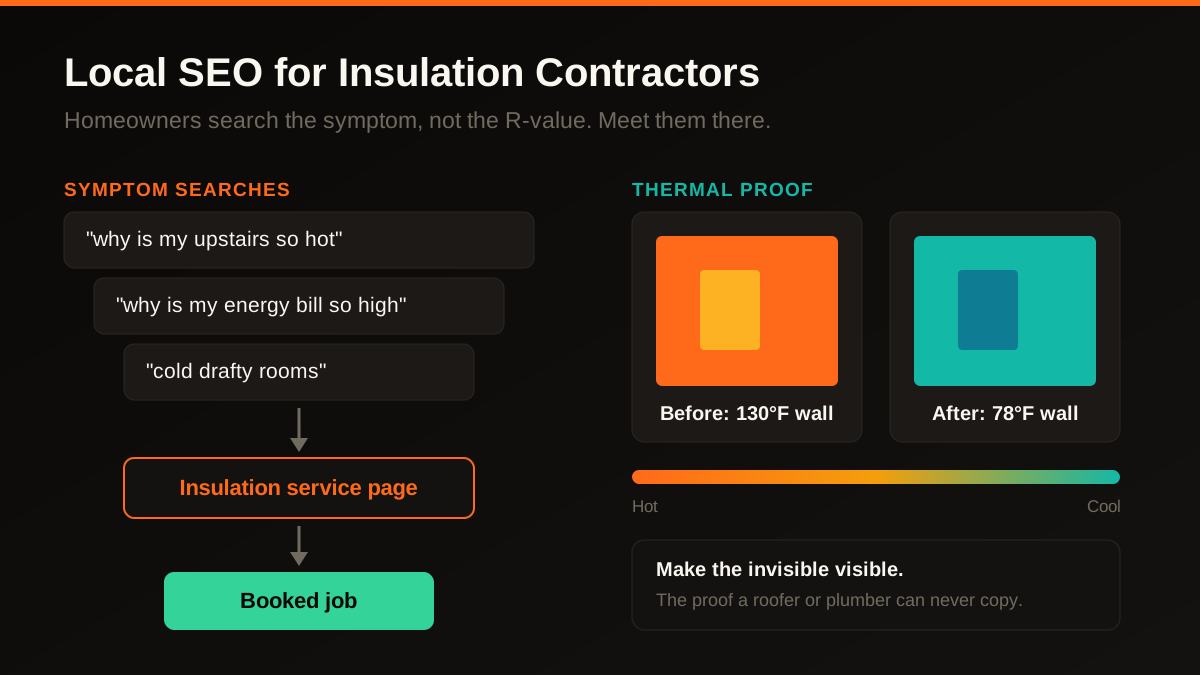
Insulation marketing needs to connect a homeowner concern with a credible assessment, not diagnose a building from a search phrase. Someone asking why the upstairs is hot may need insulation, air sealing, ventilation changes, HVAC work or a combination. A useful contractor page explains the possibilities, the assessment process and the limits of what can be established online. That gives the customer a reason to contact an appropriate professional without promising a result the website cannot know.
Map homeowner questions to the services you actually provide
Start with recent customer questions and completed project records. Separate attic insulation, wall work, crawl-space work, air sealing and removal where the scope and buyer decisions differ. Explain what the crew does, what is excluded and how the property is assessed. A technical page about material choices can be useful; the problem is leaving a less experienced buyer without a plain-language route into it. Link an explanatory comfort article to the relevant service rather than duplicating the same article under every town.
- Record the customer concern in their words, then identify which services might be relevant and which require a referral.
- Explain the assessment before discussing a solution: access, existing conditions, moisture concerns and the information needed for a quote.
- Describe materials and application choices accurately. Avoid claiming that one product is the right answer for every property.
- Give each page a clear next step, such as requesting an assessment, with the actual service area and response expectations.
Use project evidence that a reader can understand
Photographs and assessment outputs should explain the work rather than decorate the page. Use genuine images with permission and captions describing the property context, work performed and any limitations. Thermal images require interpretation: camera settings, conditions and the difference between surface temperature and heat loss matter. A red-to-blue comparison alone is not proof of a guaranteed bill reduction. Have the qualified professional explain what the image demonstrates and avoid presenting an illustrative graphic as a measured before-and-after result.
- Keep the original project record and permission alongside the selected images.
- Describe the date, area assessed, work scope and conditions relevant to interpreting a comparison.
- Separate observed measurements from expected benefits and from homeowner feedback.
- When publishing savings, use a documented method and explain weather, occupancy or tariff changes that affect the comparison.
Keep incentives current, especially the federal credit cutoff
As of this September 2026 review, the IRS Energy Efficient Home Improvement Credit page limits the federal credit to qualifying improvements made through 2025. Do not advertise the former 25C percentage or annual cap as an automatic benefit for a new 2026 insulation installation. A customer asking about a historical project has a different question from a customer planning work now. Refer individual eligibility and filing questions to the IRS guidance and a qualified tax professional.
State and utility programs are separate. Check the actual administrator, service territory, eligible measures, reservation requirements, installer conditions and current funding status. Do not add state and federal amounts into a savings example unless the combination is currently permitted and relevant. A useful incentive page shows where the information came from and when it was reviewed. If a program closes, update the text, offer cards and graphics together.
- Name the program and link directly to its official eligibility information.
- Distinguish the application date, installation date and filing year.
- State whether approval is required before work starts and who supplies the documentation.
- Label examples as examples; do not subtract a credit from every displayed quote.
- Assign an owner to review the page when the program changes, not just when traffic drops.
Make the Business Profile reflect the business
Keep the real business name, relevant categories, phone, website and hours accurate. Describe genuine services and coverage rather than filling fields with every nearby city. Google explains local visibility through relevance, distance and prominence; uploading photos or responding to reviews should not be sold as a way to override those factors. Use profile content to help customers understand the work and decide whether to inquire.
Invite honest reviews consistently from eligible customers, without incentives or filtering for satisfaction. A review request should not tell the customer which service and town keywords to repeat. Respond professionally and protect customer privacy. Real project images and clear service information support trust; the number of posts or images alone does not establish a ranking outcome.
Create local pages only where you can add useful detail
For a town you actually serve, explain the service coverage and use relevant project or assessment examples when available. If discussing a local building requirement or rebate, cite the responsible authority. Do not infer a rule merely because a neighboring jurisdiction uses it. Pages should make it easier to understand scope and arrange an assessment, not exist only to repeat insulation plus a town name.
- Link a local page from the corresponding service and relevant project story.
- Use accurate project locations at a level that respects homeowner privacy.
- Explain travel or access constraints if they change availability or scope.
- Avoid creating separate pages for synonyms that answer the same question.
- Keep the quote form short while collecting the location, concern and contact details needed for routing.
Measure assessment quality as well as inquiries
Track the route from inquiry to assessment, quote and accepted work. Record whether the location and requested service fit before judging a campaign by raw lead count. A content page may help someone rule out an unsuitable service, which is useful even if it does not create a form submission. Review recurring questions with the team to identify missing explanations and improve the next content update.
Sources and further reading
- IRS: Energy Efficient Home Improvement Credit
The federal credit timing used in the incentive section; not a determination of individual eligibility.
Source checked .
- Google: improve local ranking
Profile information and the local-ranking framework.
Source checked .
- Google Maps: prohibited and restricted content
Rules against fake engagement, incentives and selectively soliciting positive reviews.
Source checked .
- Google Search: SEO Starter Guide
Crawlable links, descriptive page information and content organization. Practical trade examples are SF Web Tech recommendations.
Source checked .
- Google Search: creating helpful content
People-first writing, useful original information and the absence of a preferred word count. Does not substantiate a client result.
Source checked .